Diagnose the problem
Shoreline work fails when it treats the symptom (sloughing banks) without addressing the driver (wave, flow concentration, or unstable soil). Diagnosis doesn’t need to be complicated — it needs to be honest.
Common drivers of erosion
- Wave energy focused on a corner or narrow shoreline reach.
- Steep slopes with no toe protection.
- Flowing water during releases or storm inflows.
- Traffic breaking vegetation mats and soft soils.
- Invasive stands that create voids and undercut edges.
Restoration strategies
Vegetated buffers
Best for moderate energy shorelines that need filtration and root structure.
- Native grasses and shrubs stabilize the surface.
- Buffers reduce nutrient inputs from runoff.
- Requires maintenance until established.
Riprap & toe protection
Best for high-energy corners and undercut edges.
- Stops undercutting when installed correctly.
- Works well with geotextile and graded transitions.
- Pairs well with plantings above.
Bioengineering
Best for sensitive shorelines where roots and flexible edges matter.
- Coir logs reduce wave impact while plants establish.
- Live staking and mats create long-term structure.
- Needs correct sequencing and early protection.
Access fixes
Best when failure is caused by repeated disturbance.
- Move entry/exit points away from soft banks.
- Install controlled access zones.
- Pair with a seasonal maintenance cadence.
Amphibious staging
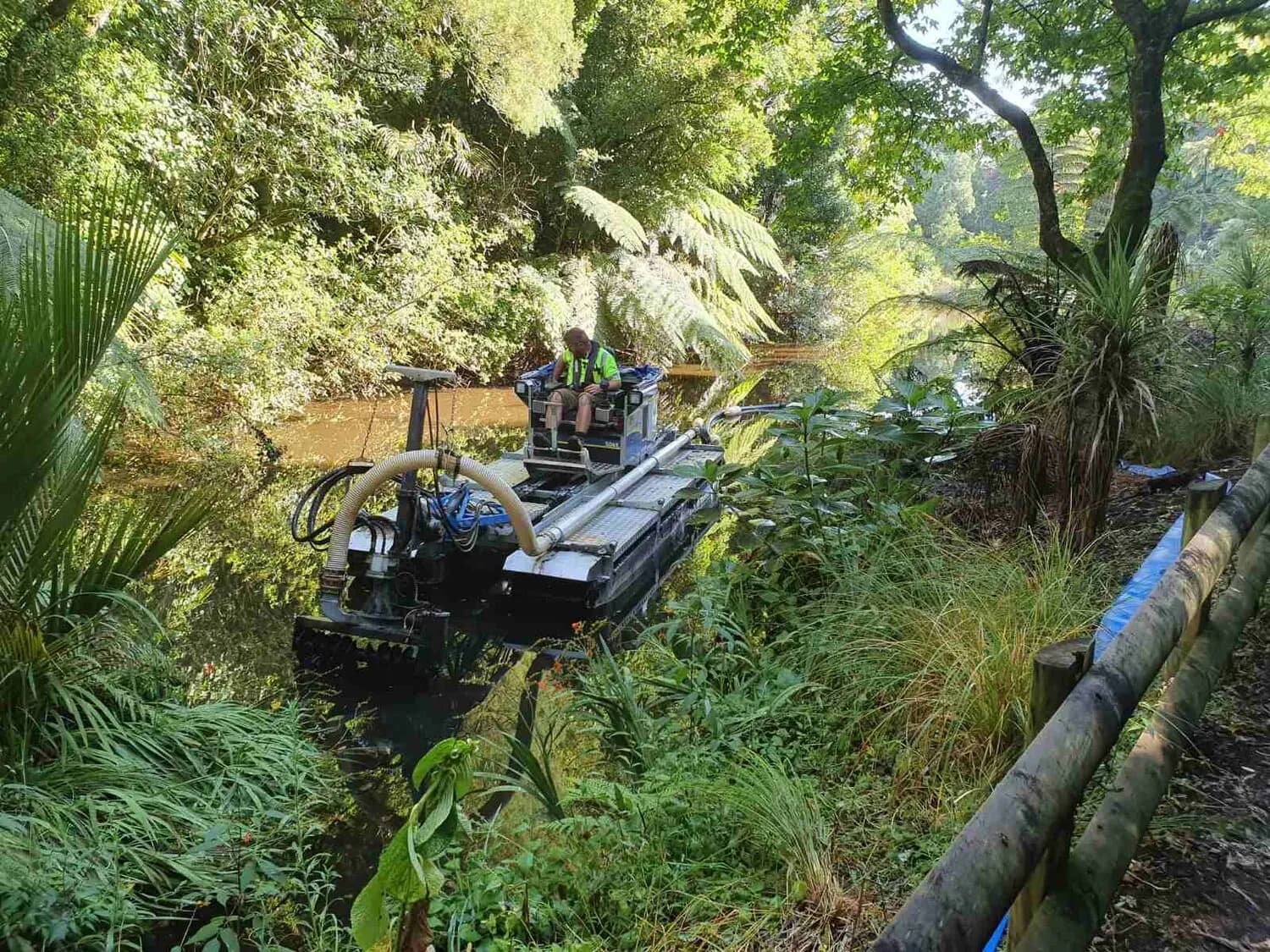
Shoreline restoration is often limited by access. Barges are expensive and shoreline equipment can tear up banks. Amphibious staging lets crews place materials and clear invasives with less disruption.
- Transport rock, logs, and plant materials along the shoreline without cranes.
- Cut invasive stands before restoration work starts.
- Stage work zones so installation stays clean and safe.
Sequencing
- Clear invasives and debris so the shoreline edge is visible.
- Set the toe protection (where most failures start).
- Place transitions so materials stay where you want them.
- Finish with buffers and stabilization above the waterline.
If the site is also losing depth, align shoreline work with sediment planning so you don’t rebuild the edge and then disturb it later.
Maintenance plan
The first season is the most fragile. Establishment takes time, and wave events happen on their own schedule. A simple maintenance plan keeps the shoreline from slipping backward.
- Inspect after major storms and repair small failures early.
- Control invasive regrowth that undermines new edges.
- Keep access controlled so traffic doesn’t reopen weak spots.