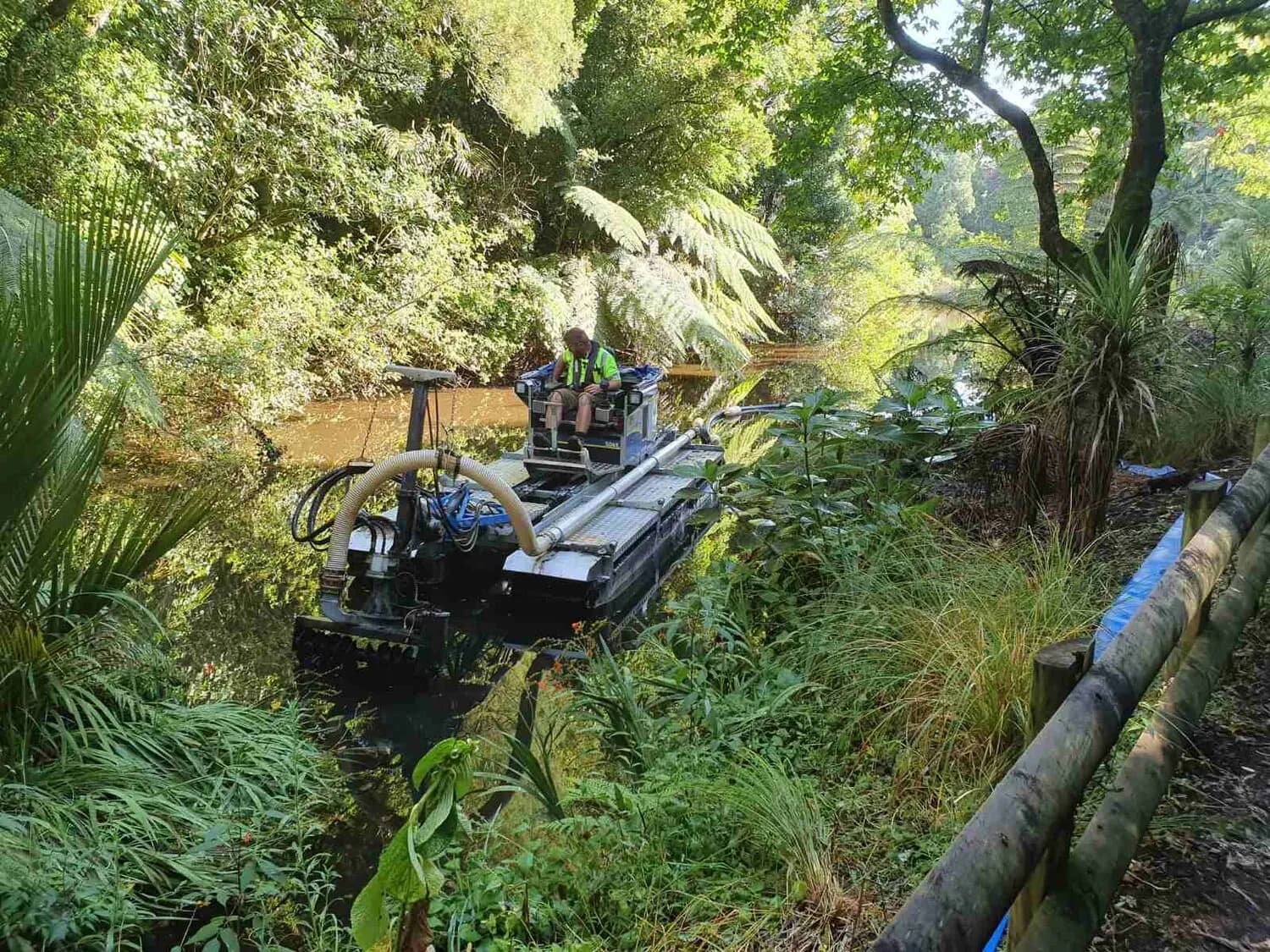
The lake looked “green” from a distance, but the real problem showed up during wind events: the water would turn cloudy and stay that way. Depth had been lost over time, and soft sediments were resuspending with every disturbance.
The goal wasn’t perfection in a week. The goal was to restore depth in the zones that mattered so maintenance could stay light and predictable.
This is a field-style case study that breaks down the decisions that made the difference: where we scoped, how we staged dewatering, and why “clean hauling rhythm” matters as much as the dredge itself.
Site snapshot (what we saw)
The symptoms were consistent with a basin that had slowly filled with organic fines:
- turbidity spikes after wind and boat traffic,
- shallow edges expanding outward each season,
- vegetation colonizing new shelves,
- debris pinning in corners and staying there.
The drivers (the three places we kept coming back to)
- An inlet corner that captured fine sediment and organic debris.
- A protected cove that stayed stagnant and “held” nutrients.
- A shallow shelf where vegetation spread aggressively.
In other words: the lake didn’t need to be dredged everywhere — it needed a targeted depth reset where the physics were driving the problems.
Scoping: what we chose to remove (and what we left alone)
The discipline in scope is what keeps projects from turning into a never-ending excavation.
The rule we followed
Remove sediment where it changes outcomes:
- restores usable depth (navigation, access, circulation),
- reduces resuspension (less “stirred-up” look),
- interrupts shallow shelf expansion (slower weed spread),
- improves inlet function (less repeat filling).
The measurements that mattered most
- depth along simple transects,
- soft-layer thickness in the three driver zones,
- photos tied to hotspots (wind exposure, vegetation density, debris).
We also aligned the dredge scope with baseline monitoring. Pairing dredging decisions with water quality testing helps you track the trend, not just the visuals.
Staging: why the shoreline plan was the real project
The biggest operational risk was “too much wet material” too quickly.
Dredging produces wet material. If that material doesn’t have an organized place to land, drain, and load, the shoreline becomes the bottleneck and you lose time to re-handling.
The layout principles
- Wet receiving is separate from truck loading. Trucks stay clean; the wet zone stays contained.
- One primary dewatering zone + one backup. Weather happens.
- Clear feed edge. The machine needs a predictable shoreline handoff point.
- Traffic moves one direction. Fewer reversals, fewer delays, fewer surprises.
If you’re planning a similar project, the full planning framework is here: sediment removal plans.
Production rhythm: what kept the week from going sideways
The goal wasn’t “maximum output on day one.” The goal was stable throughput.
Day 1–2: validate and tune
- confirm soft spots and adjust staging,
- tune conveyance to keep piles consolidated,
- establish a repeatable loading pattern.
Mid-week: steady production
Once the shore rhythm is set, production becomes predictable. That’s when the project moves from “busy” to “controlled.”
End of week: transitions and cleanup
- shape piles and keep access open,
- switch zones without losing the shoreline rhythm,
- leave the site ready for follow-up maintenance (not a mess that needs rescue).
Outcomes: what changed (and what didn’t)
The goal wasn’t a cosmetic “surface fix.” The goal was a structural improvement in how the basin behaves.
What typically improves with targeted depth restoration:
- less resuspension during wind events,
- fewer shallow shelves that drive rapid vegetation expansion,
- better inlet function (less repeat filling),
- easier maintenance access (harvesting, shoreline work, monitoring).
What doesn’t change unless you plan it:
- upstream nutrient loading,
- storm-driven debris inputs,
- the need for a maintenance cadence.
That’s why we treat dredging as part of a program, not a one-time reset. If you want the full seasonal cadence, start here: lake management.
Lessons learned (the repeatable takeaways)
- Target zones, not the entire lake. Hotspots drive cost and outcomes.
- Design dewatering first. The shoreline is the throughput governor.
- Minimize touches. Re-handling sediment is where projects leak time and money.
- Baseline the site. Water quality testing keeps decisions measurable.
- Plan follow-up. Otherwise the basin starts drifting back immediately.
Want to plan your own project? Start with lake dredging and the planning guide: sediment removal plans.