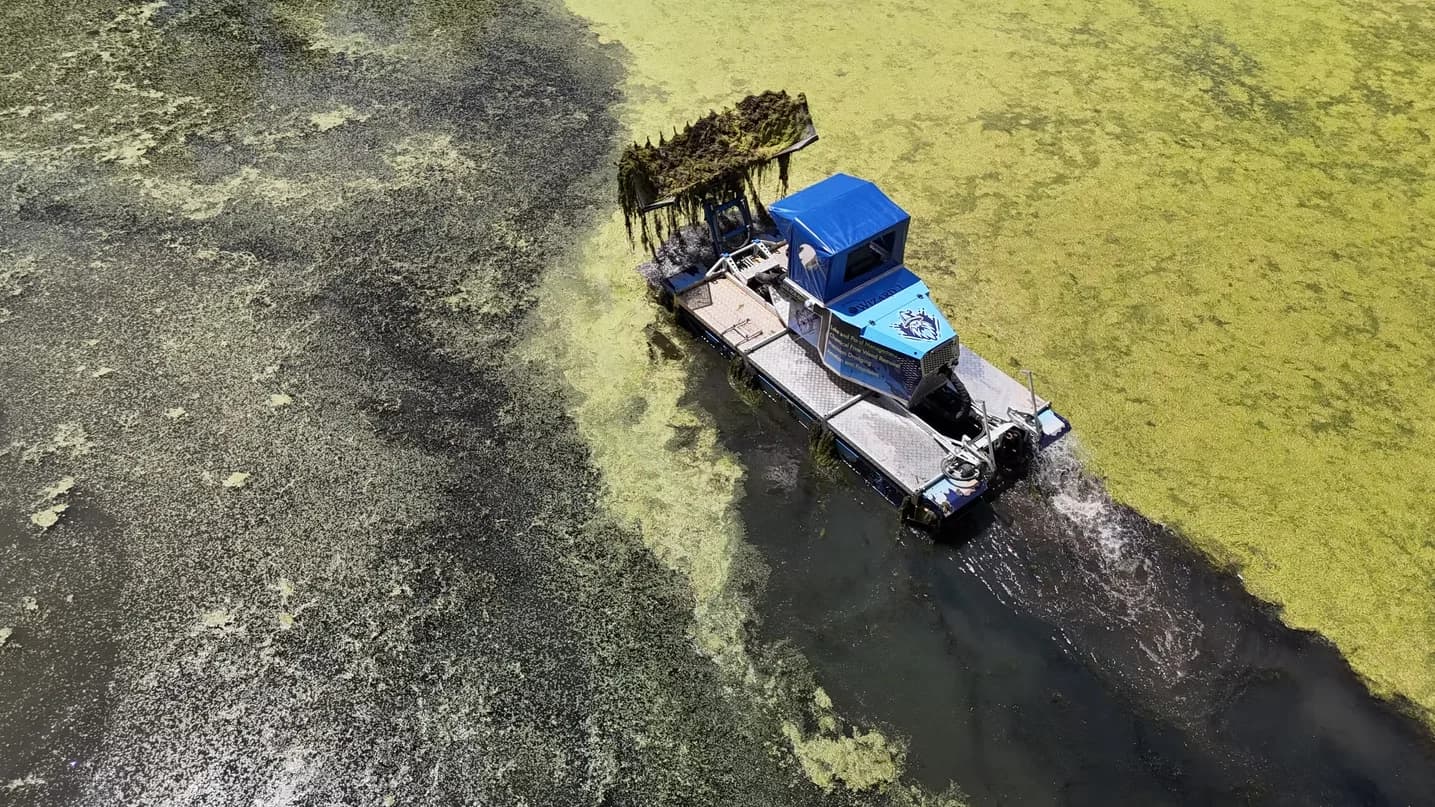
This is the speed-and-sanity checklist. The goal is simple: make day one productive and keep costs predictable by removing avoidable bottlenecks (access, staging, disposal, and unclear goals).
If you only do one thing after reading this: get us clear photos + a pinned map link + your “win condition.” Everything else gets easier from there.
What to send us (so we can quote fast)
| Send this | Why it matters |
|---|---|
| 3–8 photos from shoreline level | Helps us see access, vegetation density, and staging constraints |
| A pinned map link (Google/Apple) | Shows access points, turns, and where support can stage |
| Your “win condition” | Keeps scope disciplined: open lanes, remove mats, restore depth, stabilize shoreline |
| Any constraints | Work windows, HOA visibility requirements, traffic, utilities, no-go zones |
If you want the fastest scoping call, include one line on what stops you from using the water today (access blocked, weeds, soft muck, turbidity, algae risk, shoreline failure).
On-site access (the biggest hidden schedule driver)
Access makes or breaks production. A great machine can’t overcome a shoreline that can’t support staging or trucks.
Checklist
- Confirm gate codes, lock combos, and where we can park/support.
- Confirm trailer turn-around space and any narrow turns.
- Identify soft shoreline areas (we’ll plan track entry and staging).
- Mark utilities/structures on the map (irrigation intakes, aerators, docks, lines).
- Note zones that must stay visually clean (parks, HOAs, public access).
- Confirm where material can be staged without blocking the machine’s feed line.
Tip: If access is the constraint, send a photo of the best hard surface within ~200 feet of the shoreline. That’s often where we build a clean staging rhythm.
What’s in the water (and what changes the plan)
You don’t need to identify every plant perfectly. Photos usually do the job. But these notes speed up planning:
- Dominant plants (cattails, phragmites, milfoil, pondweed, floating mats).
- Water level swings (stormwater basins behave differently than recreational lakes).
- Debris sources (storm drains, downed trees, leaf loading, public dumping).
- Algae presence (surface scum vs filamentous mats vs submerged growth).
- What changed recently: “after storms,” “after irrigation season,” “after last year’s dredge.”
If algae is a concern, use the site baseline page: water quality testing. For bloom safety context: https://oceanservice.noaa.gov/hazards/hab/
Material handling: decide the “where does it go” question early
Most projects slow down when disposal is vague. Decide early:
- Staging: Where can piles sit without blocking access?
- Dewatering: Do we have a pad/zone that can drain and stay firm?
- Hauling: Are trucks allowed on-site? Any route restrictions?
- Destination: On-site beneficial use, permitted stockpile, composting partner, landfill, etc.
If the work includes muck/sediment, start here before you lock schedule: sediment removal plans.
The one-page deployment plan (the order matters)
Most sites move faster when we follow a clean sequence.
- Open visibility and lanes with harvesting so the shoreline is visible and staging stays usable.
- Remove the problem mass (weed mats, debris, floating biomass) and keep it moving to shore.
- If depth is the driver, measure soft-layer thickness and plan dewatering/hauling before the dredge window.
- Stabilize and maintain with lake management so the site doesn’t drift back.
A “walk-it-today” checklist (15–20 minutes)
Print this section or use it as a note template.
- Walk the shoreline and mark 2–3 access points on a map screenshot.
- Identify one clean staging zone where trucks can load without blocking traffic.
- Take photos of: worst vegetation, inlet corner, shallow shelf, and best access.
- Note hazards: utilities, intakes, docks, fragile banks, public access pinch points.
- If you suspect muck: probe soft-layer thickness at 5–10 hotspots (marked stick works).
- Write one sentence: “Success looks like ______.”
Day-one expectations (so nobody is surprised)
What we typically do on day one:
- confirm access and staging layout,
- validate the work sequence,
- establish a “clean rhythm” for moving material to shore,
- and tune the plan so production stays consistent the rest of the deployment.
If you want a job that feels calm and controlled, the goal is to eliminate improvisation early.
Ready to schedule?
- If your project is dredging-forward: start with lake dredging.
- If vegetation is the constraint: start with harvesting.
- If you want the fastest scoping call: book a deployment.