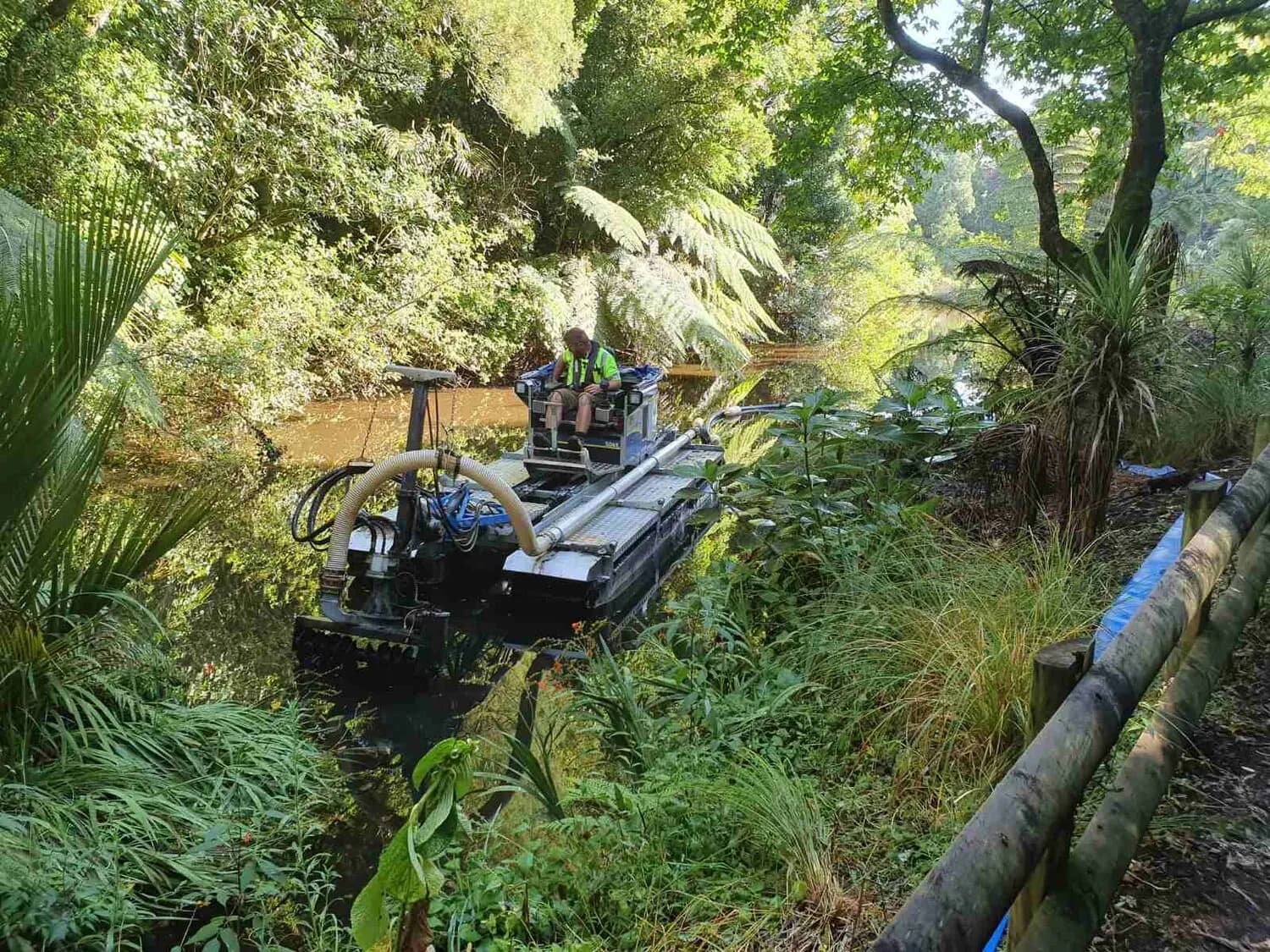
Corridor work is different. You’re often operating next to roads, property boundaries, utilities, and multiple stakeholders who all have different priorities.
The win condition is simple: keep flow moving and minimize disruption.
This case-study-style guide breaks down the repeatable corridor playbook: clear pinch points, remove the repeat offenders, and hand off a maintenance plan that prevents constant re-blockage.
Why corridors clog (the repeat pattern)
Most corridors don’t “randomly” clog. They clog in the same places for the same reasons:
- a bend that pins floating debris,
- a constriction under/near a crossing,
- low-velocity pockets that allow vegetation to establish,
- upstream inputs that keep delivering material.
If you clear the blockage but don’t address the repeat offenders, the corridor will be back in trouble after the next storm cycle.
Corridor constraints: narrow banks and shared access
- Limited staging space means every pile location and truck turn matters.
- Utilities and structures limit where you can work and where you can stage.
- Work windows are tight because corridors are “in use” (traffic, residents, irrigation, flood control).
- Stakeholders vary: some want aesthetics, some want capacity, some want minimal noise.
The planning questions that prevent chaos
- Where can the machine enter and exit safely?
- Where can support vehicles stage without blocking the corridor?
- Where does debris/biomass go immediately (not “later”)?
- What are the no-go zones (utilities, intakes, fragile banks)?
If you need a pre-mobilization template, use: Water Raptor Deployment Checklist.
Work sequence: clear, stabilize, then maintain
1) Clear the pinch point (restore flow first)
We start where flow is restricted and clear the choke point. This usually creates an immediate hydraulic improvement and makes the rest of the corridor easier to manage.
2) Remove the repeat offenders (so it stays open)
Then we target the sources that recreate the blockage:
- vegetation that breaks off and rafts downstream,
- debris pins that trap more debris,
- shelves that allow aggressive plants to establish,
- corners that hold sediment and narrow the channel over time.
If shoreline failure or erosion is feeding the corridor, pair the work with shoreline restoration.
3) Confirm capacity needs (when dredging becomes the right lever)
If the corridor is chronically shallow or losing capacity, we scope dredging and align it with access and staging. Planning is the difference between “moving muck” and a smooth operation.
Start here: sediment removal plans.
4) Hand off a maintenance plan (the highest ROI step)
The best corridor jobs end with a simple playbook:
- what to watch,
- where it returns first,
- and when to schedule the next pass.
This prevents emergency calls and makes budgets predictable.
What “good” looks like in corridor maintenance
| Indicator | What it means |
|---|---|
| The pinch point stays open after storms | Debris sources and traps are being managed |
| Debris is removed before it decomposes in place | Nutrient loading and odor issues stay lower |
| Vegetation is trimmed before it rafts | Fewer downstream mats and less rework |
| Access and staging stay clean | Throughput remains steady and disruption stays low |
If you manage a corridor with multiple stakeholders, the best operations are the ones that look calm: clean staging, clear routing, predictable schedule.
Service overview: river & canal management.