Cattail removal along Utah pond banks
Rhizome-driven stands that double their footprint by late summer. Cutting without full biomass haul leaves material that re-roots at the bank edge.
Water Raptor removes invasive aquatic vegetation — including cattails and phragmites — across Utah ponds, lakes, canals, and retention basins. We prioritize the species and zones driving function loss first, then sequence follow-up so the same edge does not become a repeat problem next season.
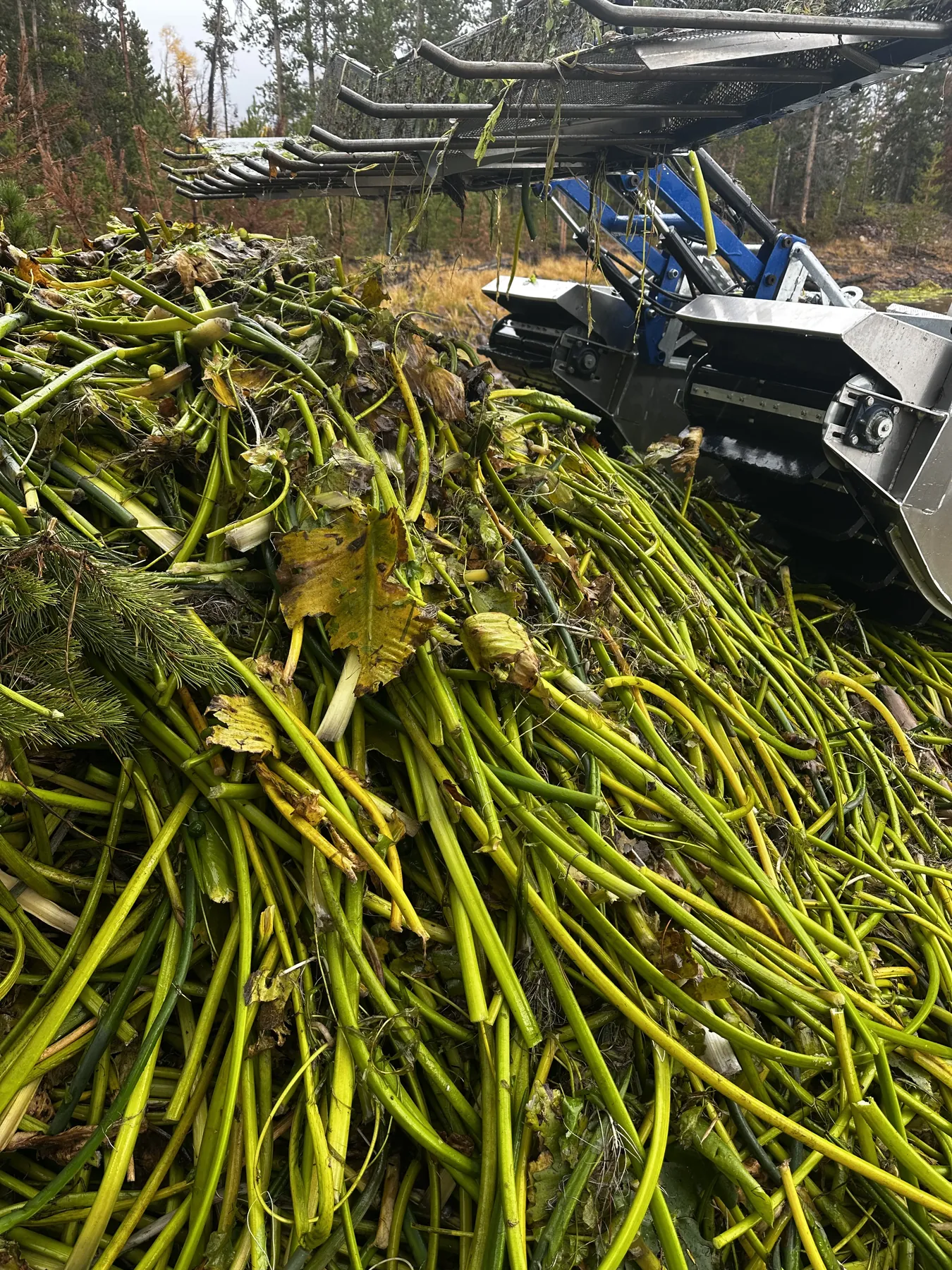
Cattail and phragmites are the most common drivers, but any invasive species gaining a foothold along a shoreline or shallow edge follows the same pattern: slow at first, expensive later.
Rhizome-driven stands that double their footprint by late summer. Cutting without full biomass haul leaves material that re-roots at the bank edge.
Dense Phragmites australis stands that establish fast and make shoreline inspection and access routes impassable within a few seasons.
Edge species growing into launch areas, dock corridors, and shoreline walking paths.
Invasive vegetation closing off inlets, outlets, and irrigation channels.
Weed growth around basin edges reducing design capacity and inspection access.
Cattails and phragmites both re-establish from root fragments if biomass is left on-site. Regrowth management needs to be sequenced, not just repeated.
Identify, access, remove, and plan - four field steps focused on control, not one-time appearance cleanup.
Confirm which species are present — cattails, phragmites, or other edge invaders — map their density, and mark zones that affect access or flow first.
Use amphibious or ground-based equipment based on shoreline firmness, water depth, and entry constraints.
Cut cattails and phragmites at or below the waterline and haul material fully off-site. Piles left at the edge re-root or reseed and undo the work.
Set follow-up harvest or herbicide timing by species regrowth rate and site use windows such as HOA peak season.
Good fit for invasive plant removal
When another service may fit better
Mechanical removal is usually the first move because it restores access right away and strips out biomass that would otherwise keep feeding growth. For boards and managers, the result is visible in days, not after a long wait window.
It also improves treatment decisions. For cattail removal in Utah, cutting below the waterline first disrupts the rhizome before any chemical work begins. For phragmites removal, opening dense stands mechanically lets follow-up herbicide reach root zones directly rather than requiring broad coverage across the whole edge.
Planning guides: cattail removal timing in Utah · Utah HOA lake weed removal guidance
Related: Aquatic harvesting · Herbicide application · Shoreline clearing
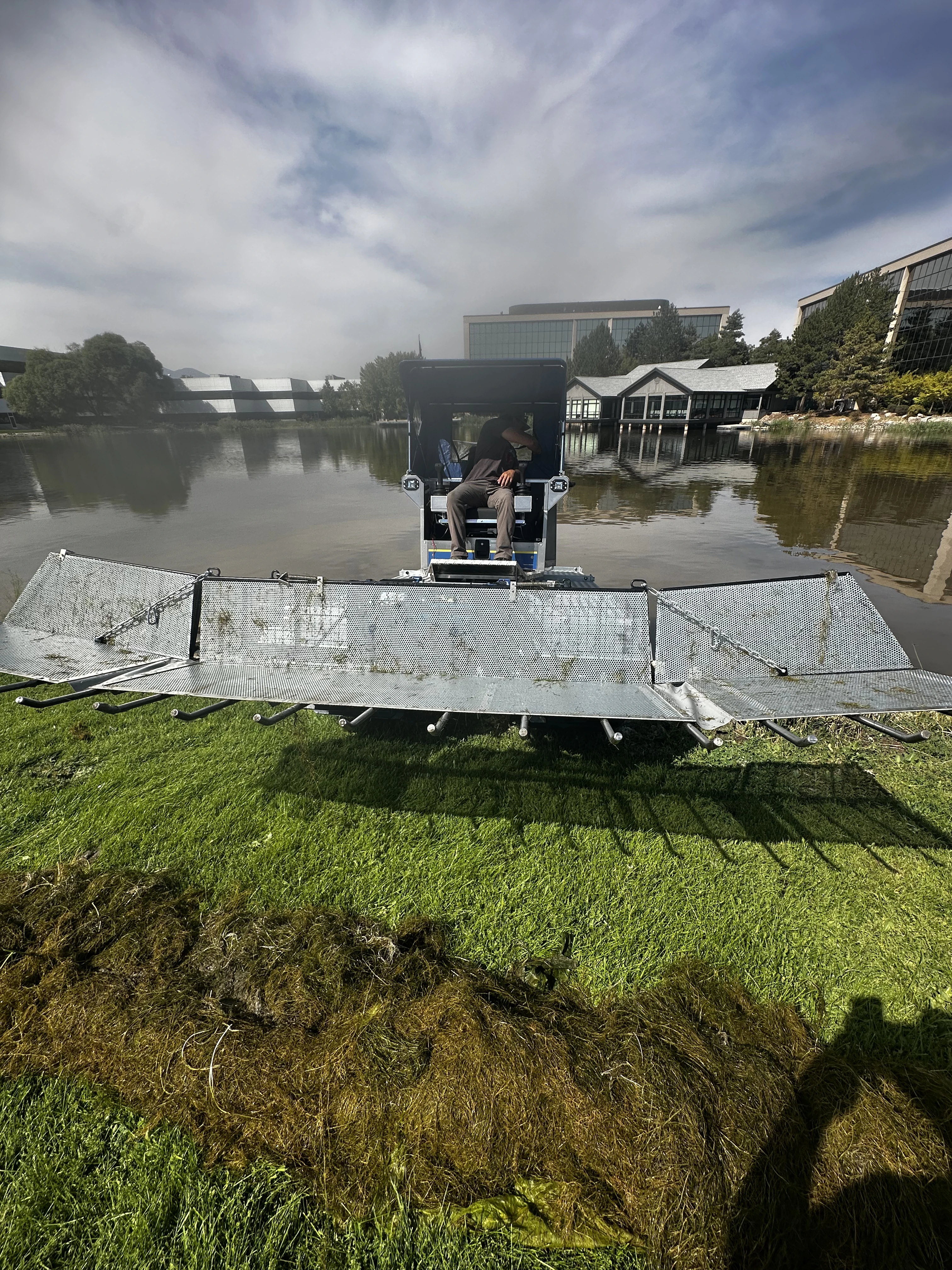
Answers to questions about cattail removal, phragmites control, and HOA project fit.
We remove cattails, phragmites, common reeds, purple loosestrife, and other invasive edge and shoreline species from Utah ponds, lakes, canals, and retention basins.
Early to mid-season is generally the most effective window for cattail removal in Utah — cutting before seed heads mature limits spread, and actively growing plants are more vulnerable to below-waterline cuts that disrupt the rhizome. That said, access restoration work can be done at most times of year. We evaluate timing based on growth stage, site use windows, and whether phragmites or other co-occurring species need to be factored into the same visit.
Cutting without removing the biomass can encourage some regrowth. That is why we haul cut material fully off-site. Proper cut depth, timing, and follow-up scheduling reduce regrowth pressure significantly compared to incomplete removal.
Full eradication of established phragmites is rarely achieved in a single treatment. The practical goal is control — reducing density, restoring access, and managing regrowth through a combination of mechanical removal and, where appropriate, targeted herbicide follow-up.
Mechanical removal is the standard first step for phragmites removal in Utah — cutting dense stands at or below the waterline strips out the above-ground biomass and exposes the root zone. This alone rarely provides permanent control, but it immediately restores shoreline access and makes any follow-up herbicide treatment far more precise and effective than applying it to untouched, dense growth.
Yes. HOA pond and lake edges are one of our most common project types. We work within site access constraints, coordinate with property managers, and can recommend maintenance schedules to prevent the same overgrowth returning each season.
Tell us what is growing, where it is, and how access looks. We will recommend a practical harvesting, removal, treatment, or support approach.
No generic promises. We review your site details first, then recommend a scope path that matches actual field constraints.
Request a Quote